
June in Ancient Rome was full of celebrations and festivals – including the festival of Vestalia dedicated to the goddess Vesta, who protected the home and hearth.
The festival was for women only – the temple of Vesta in the Roman Forum had a hearth and the fire there was kept alight by the Vestal Virgins. The festival took place from 7-16 June and no men were allowed into the temple during that time.
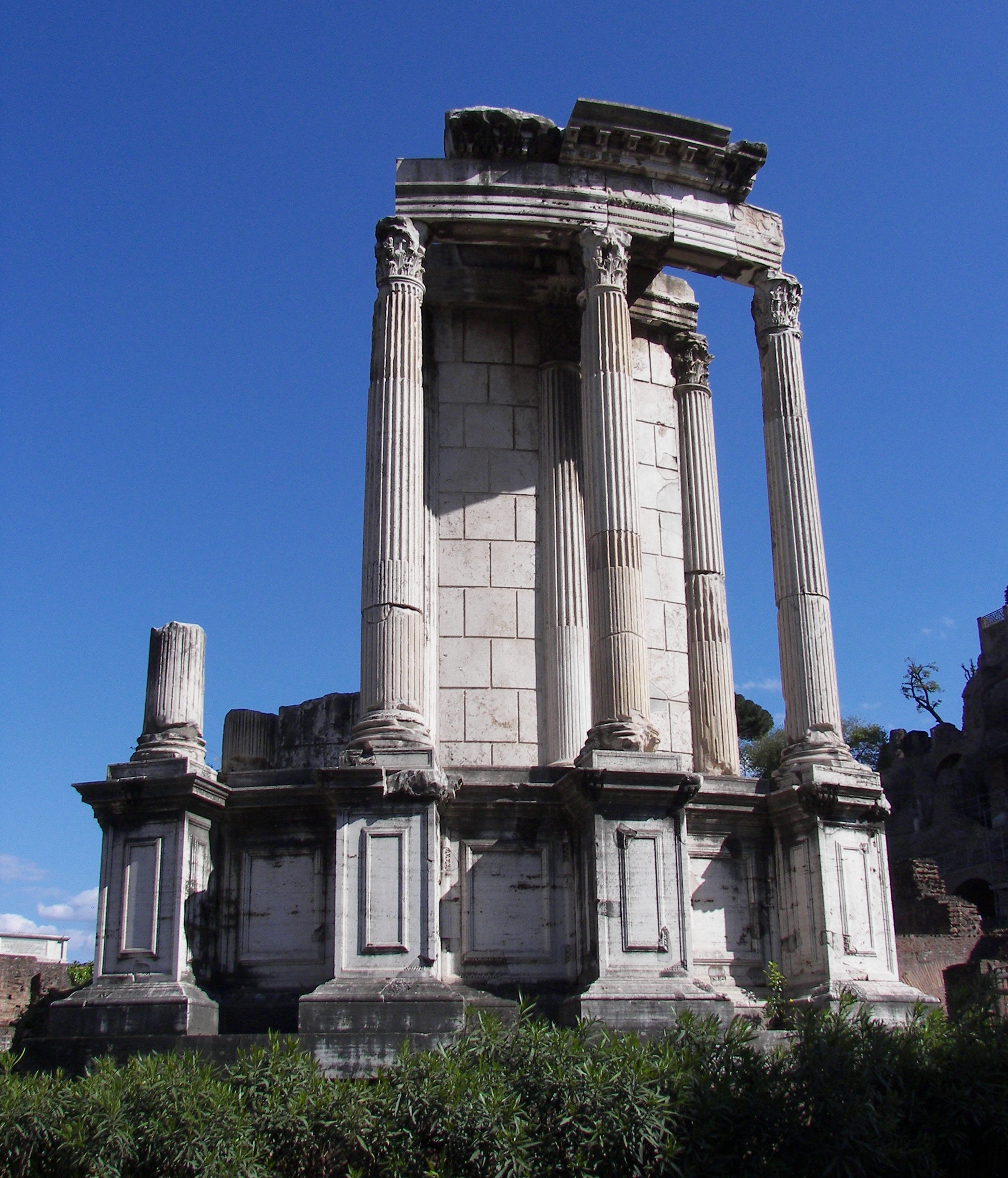
Vestalia was an important event in the Roman calendar, however. The main event took place on 9 June. The temple to Vesta did not have the usual staue to the goddess, but the hearth replaced it. Vesta was also a symbol of Rome and it was thought that if the sacred fire were ever extinguished, Rome would fall. The nob of the Vestal Virgins was to guard the hearth.
The virgins were mainly young girls – some as young as six, and many of them were pre-pubescent. As women in Rome could marry young, many of the Vestal Virgins were no more than ten years old and were specially chose for the role, which required 30 years of dedication. The girls had to have both biological parents still living – and be physically perfect. No defects were allowed in the Vestal Virgins.

The Vestal Virgins lived in the House of the Vestal Virgins (casa delle Vestali) away from their families, in a highly protective atmosphere. It was situated just behind the temple in the Forum, so there was no chance of slipping out unseen. To be a Vestal Virgin was both an honour and a sacrifice – the role came with social privileges, but meant sacrificing the normal pleasures of life, including suitors and marriage, until the 30 years of service were over.
They dressed as brides while carrying out their duties – and could be punished or even executed if they strayed from the path of virtue while serving the goddess. So the idea of a women-only festival was not quite as forward thinking as it might seem at first glance! However between 7-15 June, the inner sanctuary of the Temple to Vesta was open to all women, not just the Vestal Virgins.
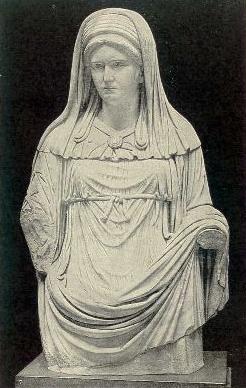
bridal wear and hairstyle worn
by Roman women on their
wedding day
Because the hearth was central to the home, the festival of Vesta took on other significances – bread was a staple food in Ancient Rome and especially for poorer families, in which women might grind the wheat or corn. The main event on 9 June became associated with millers and bakers and the day came to celebrate flour millers and bakers.
Vestalia eventually fell out of popularity when Rome turned to Christianity, thanks to Emperor Constantine and his mother, Helena. Emperor Theodosius eventually ended the celebration in 394 AD, by which time the pagan gods of Ancient Rome had been replaced by Christianity as the main religion. Christian saints such as Saint Anthony -whose saint’s day is 13 June – became the focus of celebrations after that date.
The remains of the small temple to Vesta are in the Roman Forum.
Buon viaggio!
 novelromealone