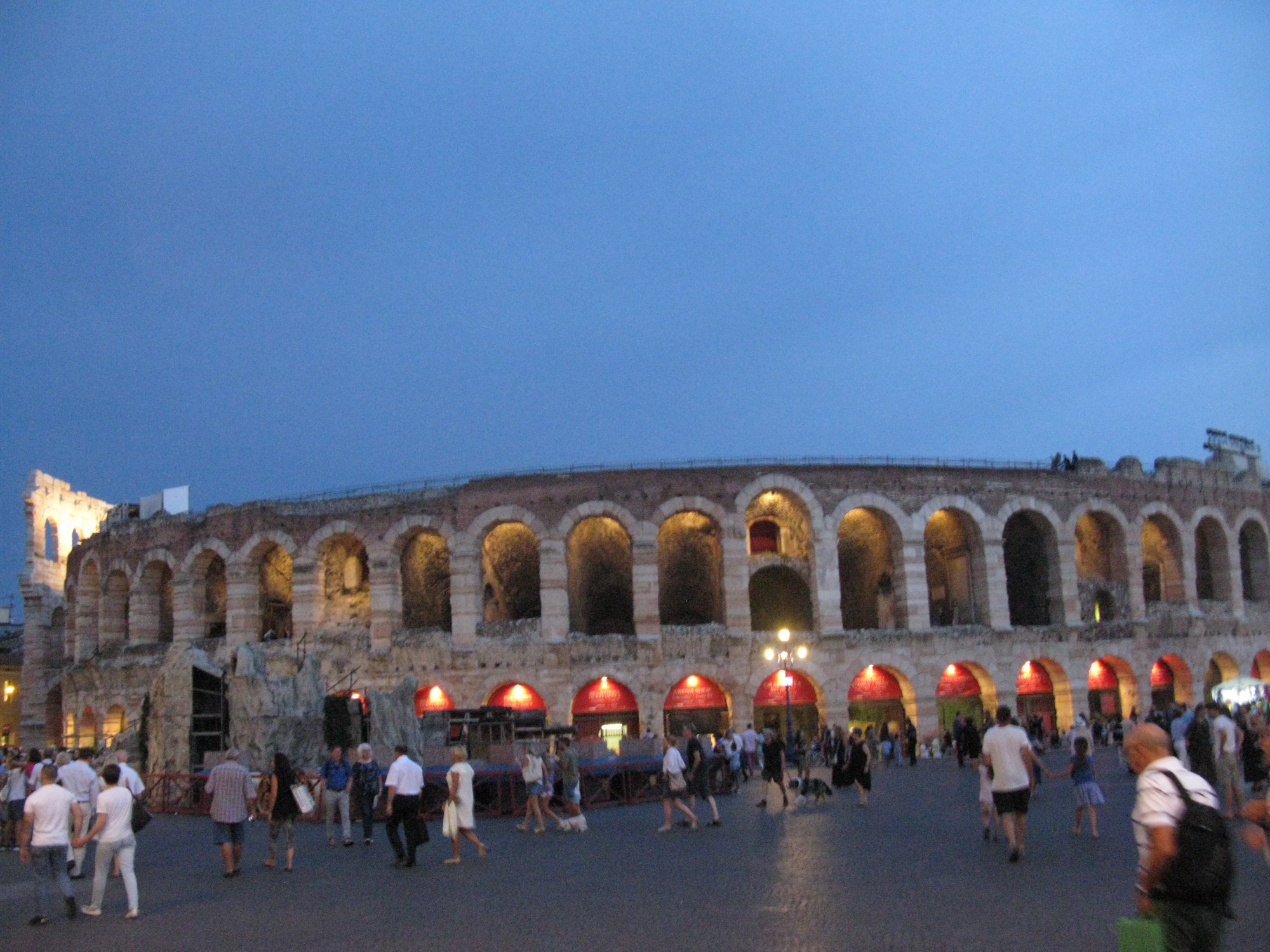
While you were busy reading the Novel Rome Alone blog and learning about the sack of Rome in 455AD, I was in Verona and Venice, catching up on the two cities since the pandemic. Well, I can report the Roman ruins are still alive and well – but both cities are a lot busier. In fact, I don’t think I have ever seen so many tourists in Venice in June, which is usually a much quieter time to visit, as the weather in the Veneto can be cool and rainy. Fortunately, the storms that were predicted before I left only lasted for one night – but what a storm! Thunder and lightning – and the streets of Verona running with water at night. The mornings were cloudy, the afternoons warm and sunny.
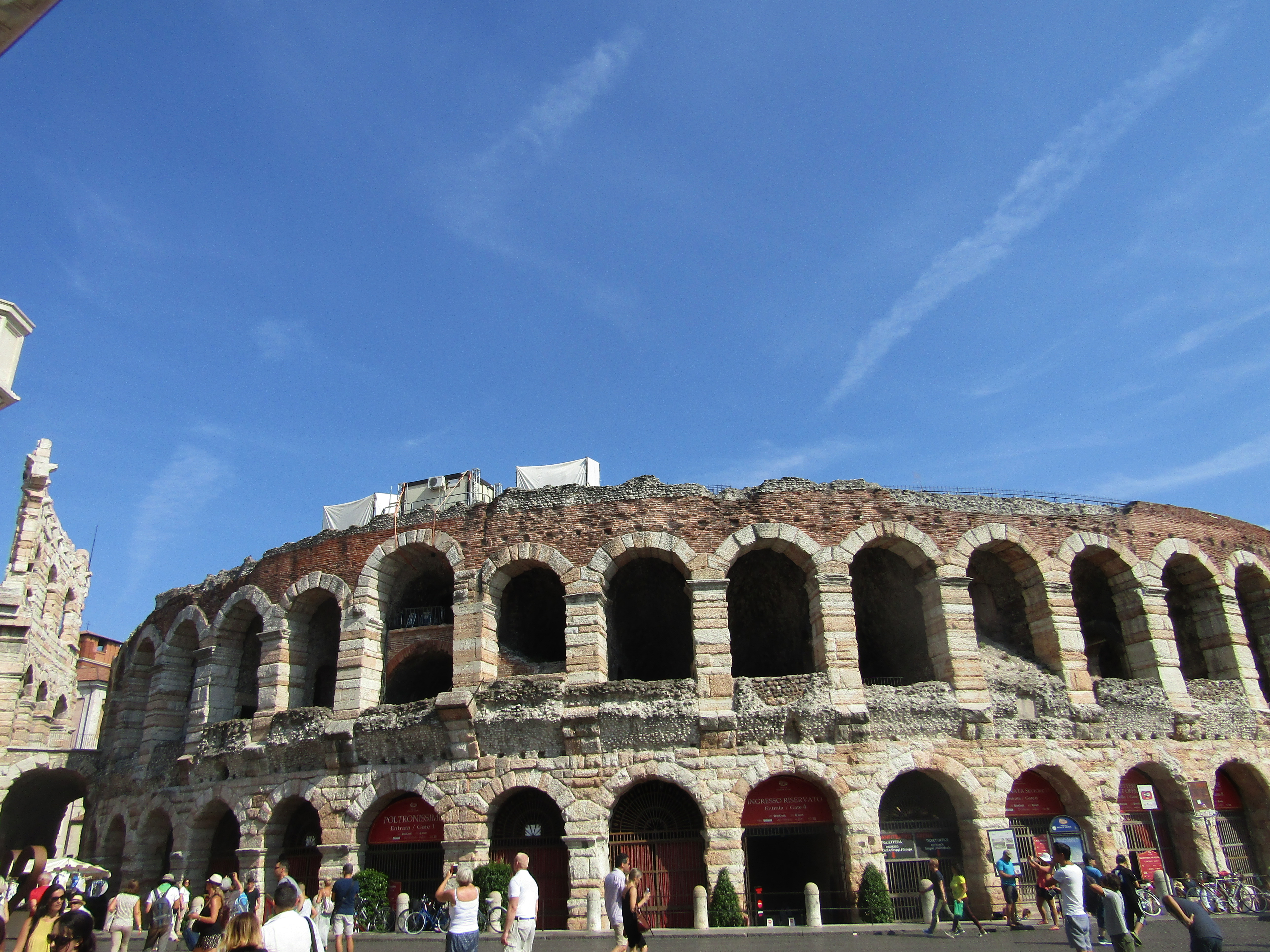
Visiting Verona in June
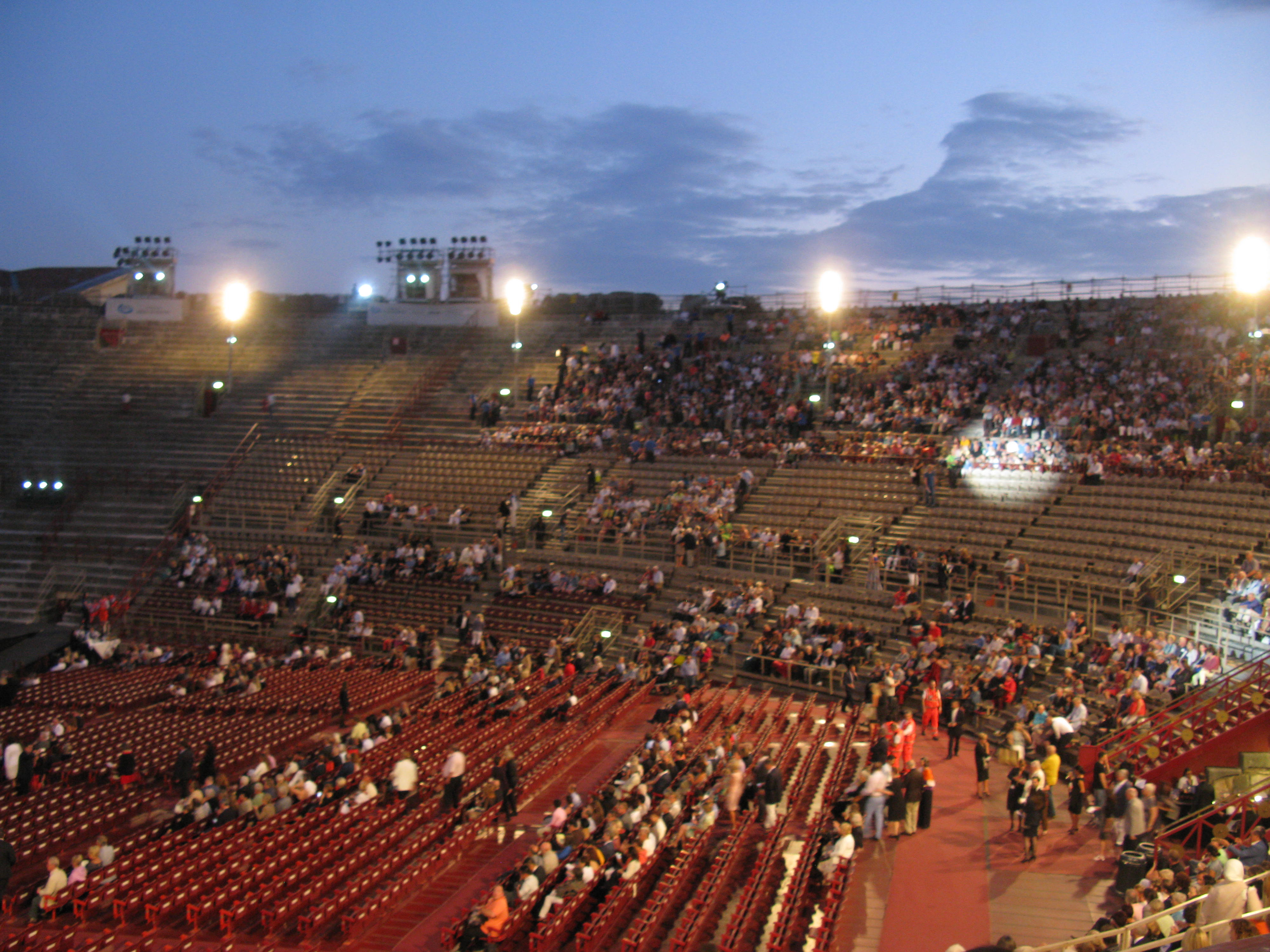
Verona boasts one of the Roman Empire’s largest amphitheatres – and every summer from mid-June to early September, the opera season takes place at the arena. It is a fantastic spectacle and definitely an experience to place on your bucket list.
The city of Verona is, of course, famous for Romeo and Juliet – and is known as the city of romance. Historians and romantics are still arguing over the story of the star-crossed lovers – what is known is that there were in the 13th century, two families called Montecchi and Capuleti living in Verona, who fought each other for control of the city.
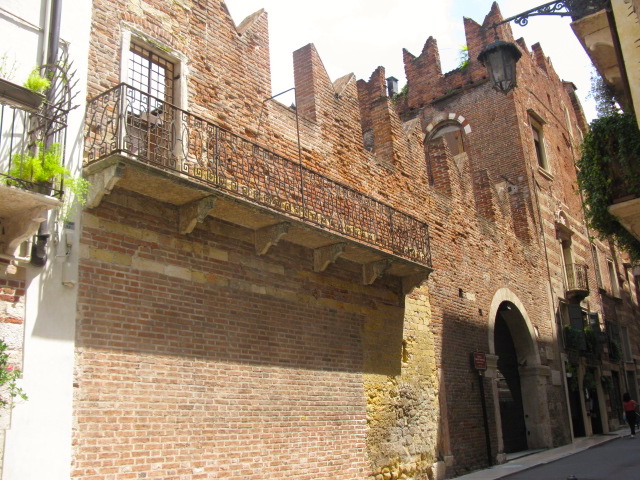
It is thought Romeo and Juliet was a true story passed down to Shakespeare through the Franciscans, as it was a Franciscan friar who married the young lovers and helped plan the escape after Romeo was banished for killing Juliet’s cousin.
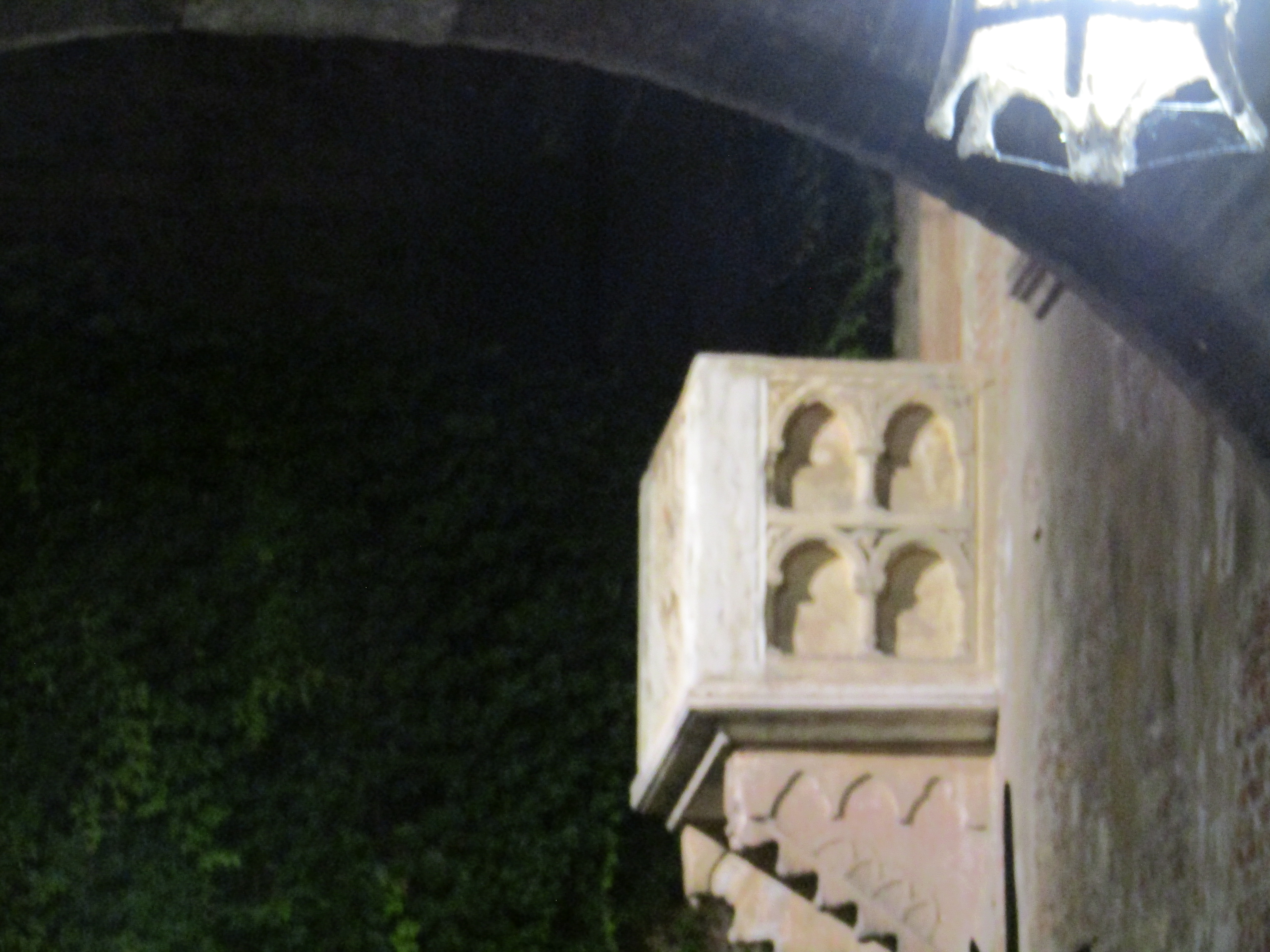
There is an authentic house belonging to the Montecchi family in Verona, just streets away from the house that Verona city council bought in the early 20th century to satisfy tourist demand for a Capulet house where Juliet lived. They even added a balcony! But from the rooftops, Juliet would have been able to see the rooftop of Romeo’s house.
There is also a tomb said to be that of Juliet’s, just outside the city walls within the grounds of a Franciscan monastery that you can visit.
It is thought Romeo and Juliet died in around AD1295, just as the clocktower in Piazza Erbe was being constructed. It was finished in AD1300.
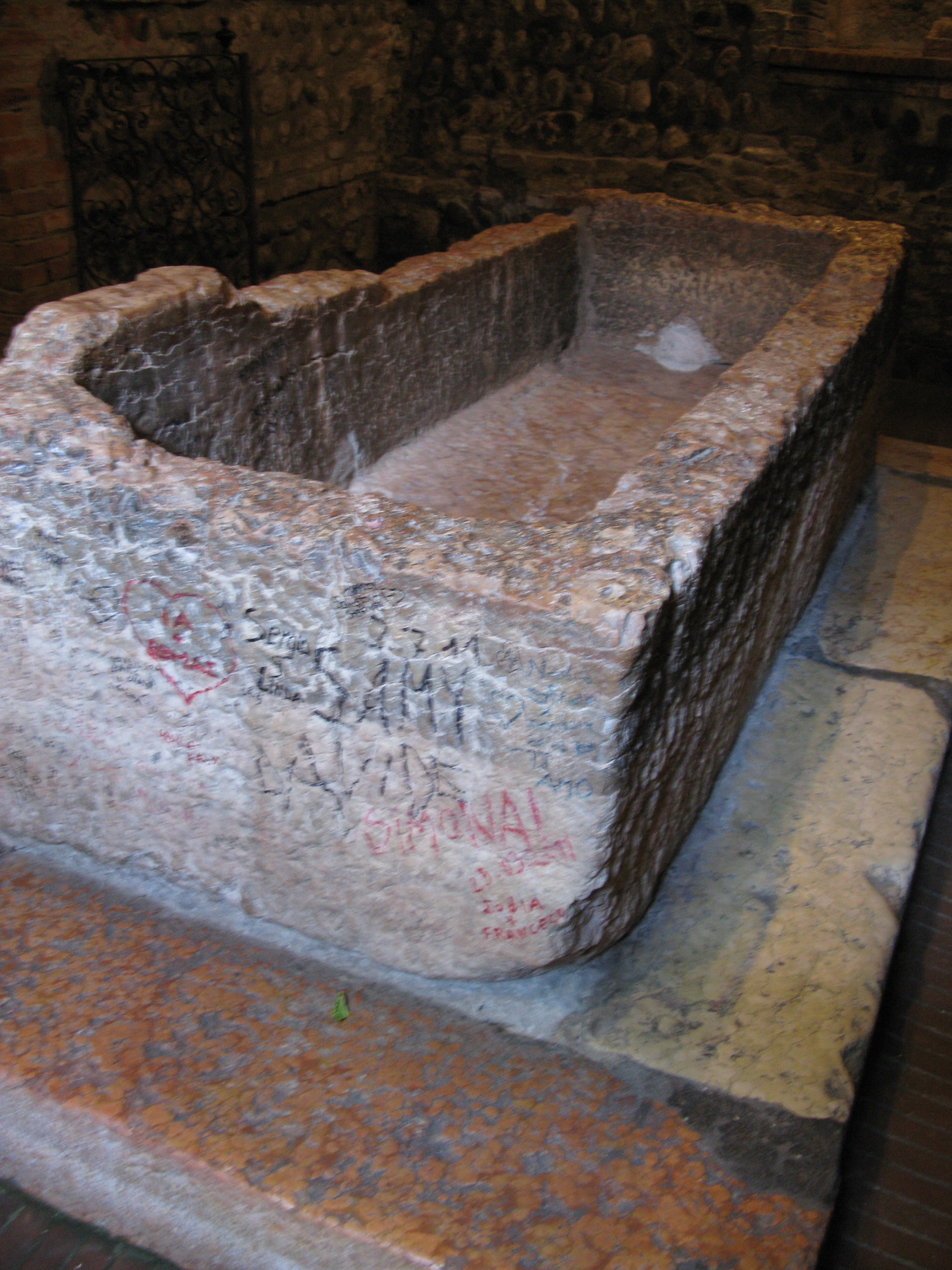
Sadly, it is no longer possible to leave messages of love on the wall at Juliet’s house, but you can send your letters to Juliet at the address Juliet, Verona, Italy. It will reach her and one of her secretaries will reply! Or see Juliet’s Club online! The local municipal WCs also kindly provide a graffiti board in cubicles so that visitors can leave their messages of love!
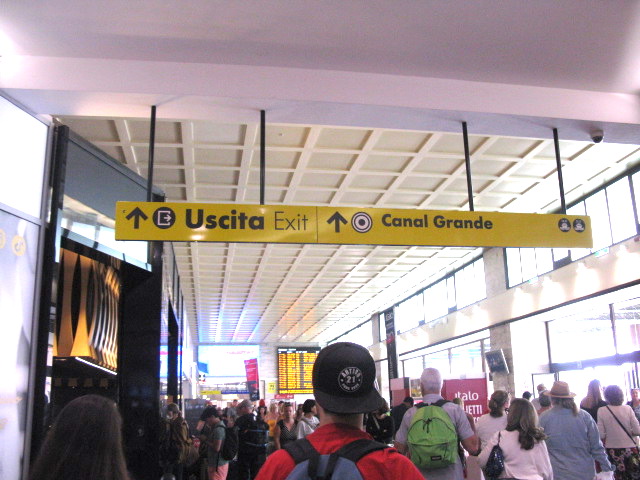
Verona is a great base for travelling round Italy – it has an airport and also a fantastically well-connected railway station – the Italian rail company Trenitalia is uber-efficient, the trains are quite comfortable and fares are cheap. Not even torrential rain will stop a Trenitalia train from getting to its destination!
From Verona you can easily visit Milan, Mantua, Bologna, Padua and, of course, Venice – as well as many other cities. From Milan you can take a train to the lakes, or even Switzerland – Lugano is just across the Italian border.
But first, Venezia.
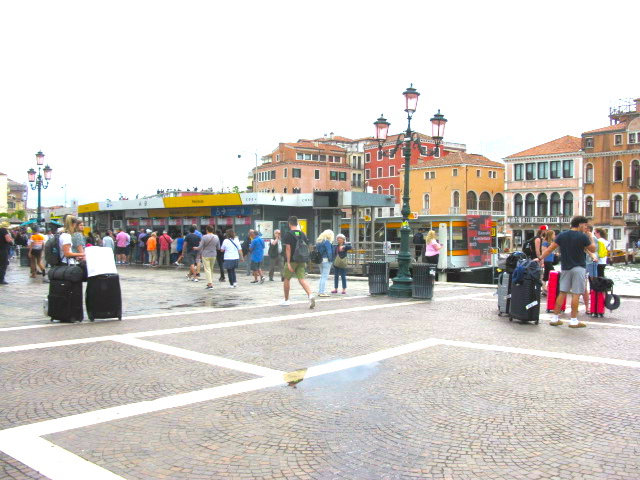
Visiting Venice in June
Venice is, of course, such a well-known city, it is hard to describe its uniqueness and beauty. Built on marsh land when Romans fled after the Western Visigoths invaded Rome in the 5th century, Venice grew into one of the most important trading centres in the world. It is said the Apostle St Mark wrote his gospel in Venice, hence the importance of Mark to the city.
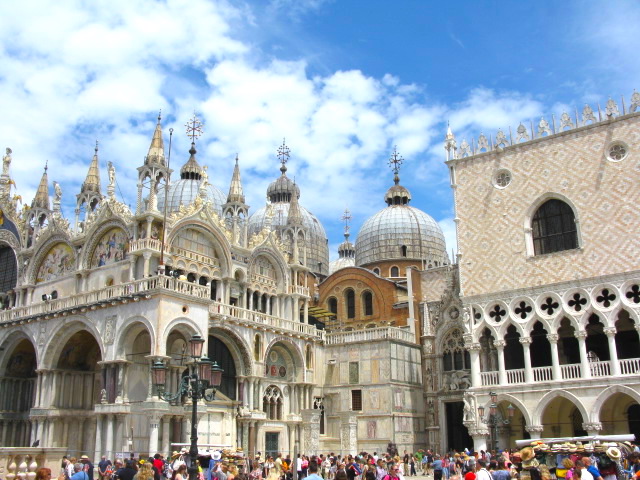
The famous story about how St Mark’s body came to be interred in Venice involves Venetian merchants kidnapping the body from its resting place in Alexandria, Egypt. They concealed it from Muslim guards by covering it in pork – the smell of which was a sufficient deterrent to inspecting the casket.
Venice is also known for its Jewish Ghetto – the oldest Jewish community outside Jerusalem. Venetians considered that Jews had skills they could use, such as silversmithing and moneylending. However, the Jewish community was locked into the ghetto at night and had restricted movement.
Julius Caesar was a great friend to the Jews in the Roman Empire – and in Rome, the Jewish community mourned his death in 44BC.
Today, the Jewish Ghetto is one of the most vibrant areas of Venice and one of the most atmospheric. It is convenient to visit along with the Peggy Guggenheim Museum.

Apart from history, Venice is, of course, known for its waterways and gondolas – and Caffé Florian in St Mark’s Square, where the great philanderer Casanova used to take coffee, along with visiting poets like Shelley and Byron.
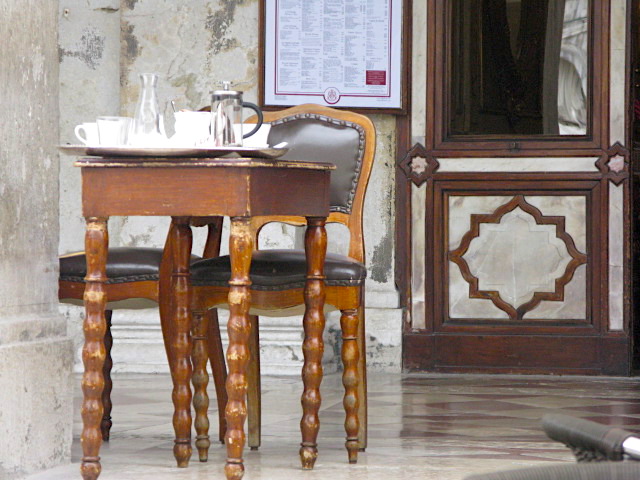
Casanova is one of the only men to have escaped from the dungeons of the Doge’s Palace, where he was imprisoned for “public outrages against the holy religion” related to his romantic activities. Born in Venice in 1725, he was imprisoned for five years on 25 July 1755 – but Casanova was not one to languish in prison for too long. You can read more about his escape at the website Walks of Italy.
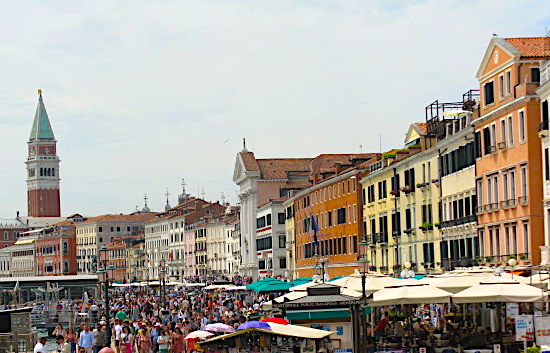
Venice is a wonderful – if at times challenging – city to visit. It is now hard to find peace and quiet in the city because of the sheer number of tourists. At times, there is hardly a paving stone to put your foot on – and people shove and push and queue jump all the time, so take plenty of patience with you. But just to have seen Venice – the greatest wonder in Italy, it is said – is an experience everyone should have on their bucket list.
Trains from Verona to Venice and back:
There are two local trains to Venice from Verona – I always take the shorter direct route, which takes one hour and 28 minutes to Santa Lucia station in Venice from Verona Porta Nuova. There are cheap fares on certain local trains – I always take the 08.22am from Verona and either the 16.18 or 17.18 back from Venice. A return using these trains will cost just 20 euros. I recommend taking an early train in case of delays, or in case there is a long queue for the boat when I reach Venice – sometimes you have to wait for over half-an-hour if the queue is long.
Returning, the trains from and to Verona usually arrive and depart from platforms 18 or 19 at Venice – at the far end of the station out in the open air. The local train back through Verona usually ends in Brescia, so look for that train. There are two Verona stations and you get off at Verona Porta Nuova, the second one.
If you catch the Milan train from Venice via Verona by mistake, it is like taking a flight – you will be on a super-luxurious executive train, and it will cost a lot more! Your passport will also be checked by the police.
If you take the wrong train by mistake from Santa Lucia in Venice, get off at Venezia Mestre and cross platforms to take the local train back to Verona – usually platforms 10 or 12, but check the timetables. Look for the train that takes an hour-and-a-half from Venice – there is another local train between Verona and Venice that stops at every local station along the route and it takes around two-and-a-half hours and is usually without air conditioning, so try and avoid that.
Comfort on trains
There are lavatories on the trains but they can be unpleasant – I take a spray can of Dettol everywhere with me when I travel! Not many people are wearing face masks these days, but I would recommend one in crowded areas and on the trains and boats.
Boats in Venice:
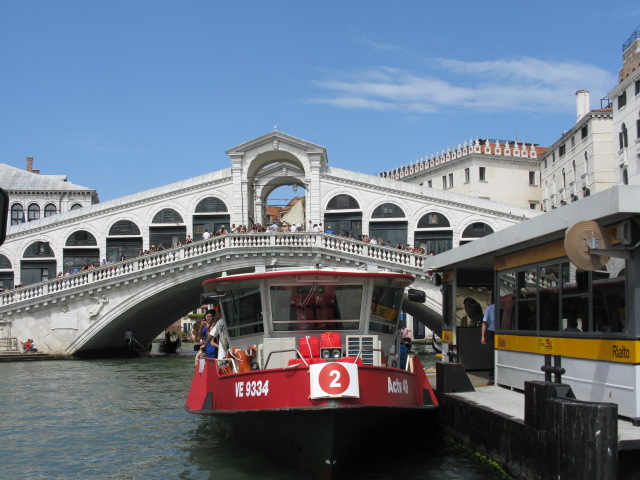
The boat once you reach Venice costs around 20 euros return to San Marco and is the number 2 along route B. The ticket office is directly outside the station exit – and you exit from the station straight onto the glorious Grand Canal!
I buy a return to San Marco but always get off at Rialto, as it takes half the time and it is easy to walk through the streets to San Marco after visiting Rialto Bridge. You can then take the boat back to the station from San Marco and enjoy the longer boat trip. The boats get crowded, so try and get near the sides of the boat if you cannot get a seat inside. You will get some fabulous shots of Venice as you depart!
You can take a water taxi in Venice, but these can be expensive, so check the cost first before leaping in! It is best to take a water taxi from the airport if you have heavy luggage, however, so pre-book one.
I hope you get to visit Verona and Venice – you will see some impressive Roman ruins in Verona – including at the Porta Leone in the city; and Venice is of course, the glorious phoenix that rose from the ashes of the Roman Empire after Rome fell. Wherever you go, have a wonderful time visiting the Veneto area of Italy!
Buon viaggio!
Images and video copyright A. Meredith
 novelromealone