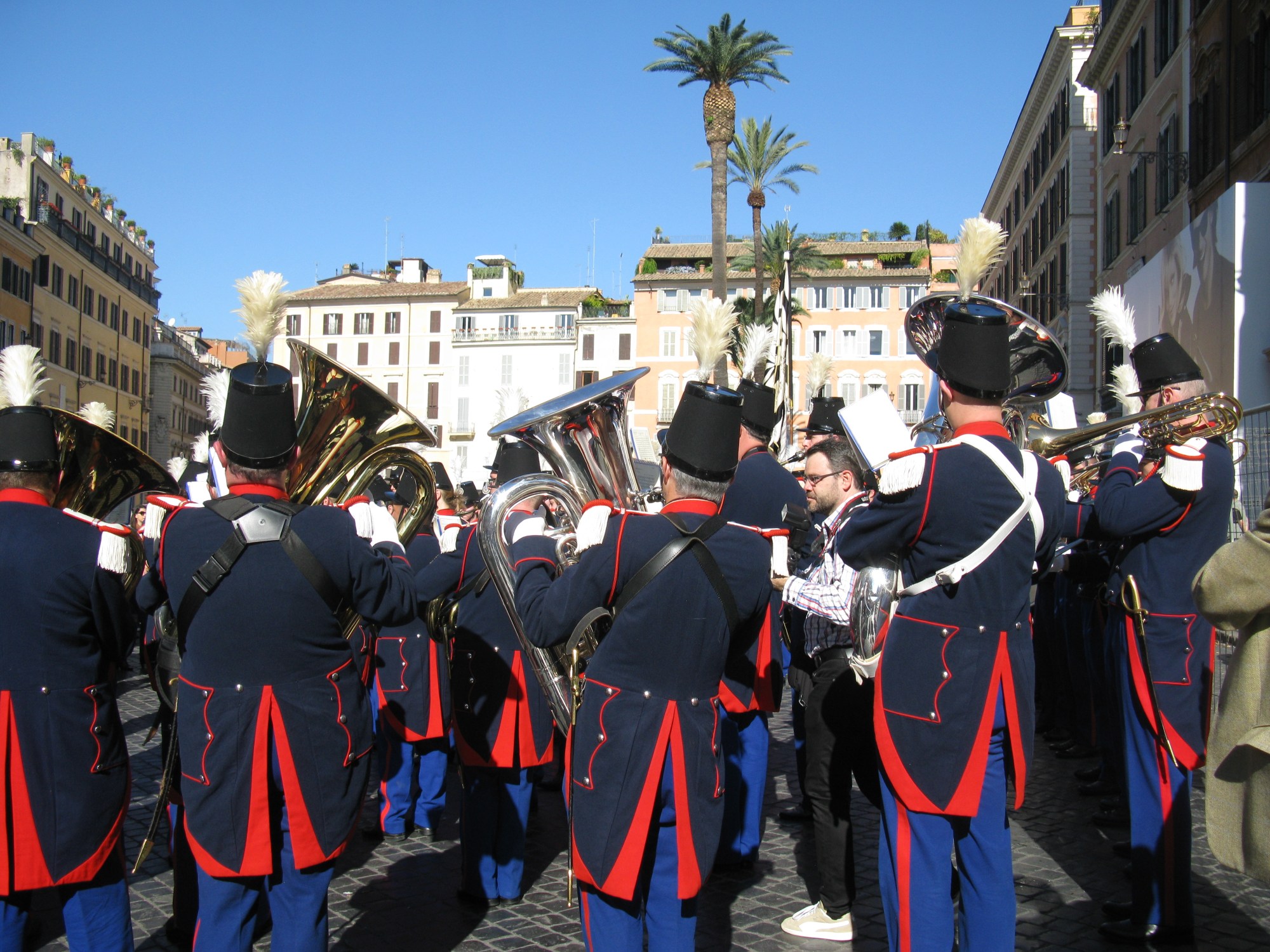
Anyone who visits Rome today will find music is everywhere – on the streets (Italy has the best buskers in the world), in the concert halls and even in the churches.
The Ancient Romans had a long tradition of music in their lives – and musicians were not short of employment. Every event from gladiatorial contests to funerals and festivals was accompanied by musicians. Triumphs were celebrated with music – as was grief.
Plucking at the heartstrings in Ancient Rome
There were more than a dozen musical instruments common across the Roman Empire, most of which we still have in some form today. The most common instruments were string instruments like the lute, the lyre and a larger version of the lyre called a cithara.
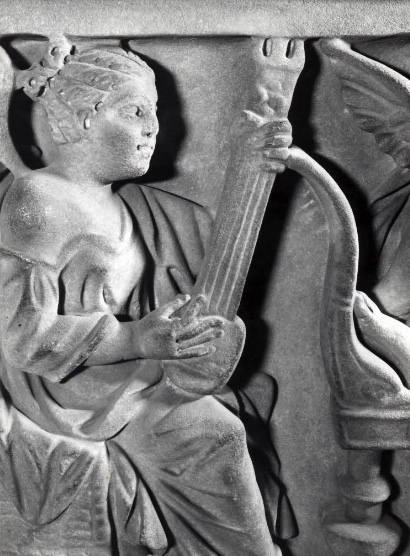
The lute was a stringed instrument similar to a guitar, with a more rounded body, but with a fretted neck and a bridge where the strings were tightened. Lutes have been found across all ancient civilisations, from Egypt to Greece, India and Iraq.
The lyre was more like a harp, but with a more ethereal sound than the lute – it was sometimes made from wood, but animal horn was also used. The lyre’s larger cousin, the cithara, eventually replaced it and offered a fuller sound.
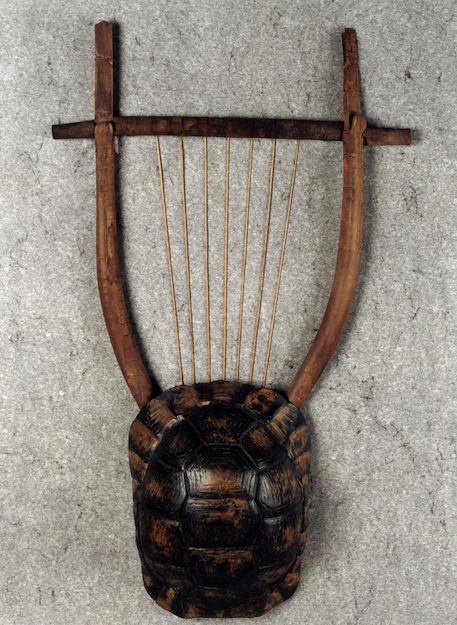
The cithara was also more like the guitar we know today, as the strings could be tuned more precisely – even during playing, as guitarists do today. Anyone could play the cithara – just as today most people have an attempt to play the guitar and hope to storm Glastonbury one day.
However, the Ancient Romans really appreciated music and were known to be quite emotional when an instrument like the cithara was played with some skill.
Just as music can make us laugh or cry today, the Ancient Romans, despite their fierce reputation, felt just the same about music.
Keyboards in Ancient Rome
Every band at some point needs a good keyboardist – in Ancient Rome, they would have been playing an instrument called a hydraulis, which is probably a good name for a band in itself. The hydraulis originated as a collection of tubes that were most likely blown down.
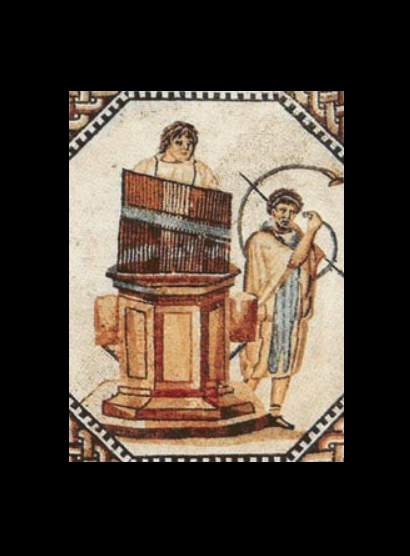
However, over time, it acquired a water tank beneath the pipes. The water was pushed into the pipes to create sounds – and it is thought it was likely one of the earliest forms of pipe organs.
Blowing your own trumpet in Ancient Rome
As well as string instruments, the Ancient Romans also had brass and woodwind instruments. One of the most popular was the syrinx, also known as the Pan flute. In ancient Greece, Pan was the god of agriculture and pastoral music. Syrinx was a nymph who was pursued by Pan to the river’s edge – after asking the river nymphs for help to avoid his amorous clutches, she was turned into water reeds. When Pan’s breathed across them in frustration, they made an ethereal sound.
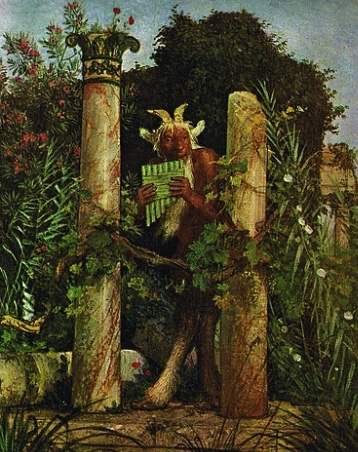
(Image: Arnold Böcklin – Faun, die Syrinx blasend (ca. 1875), Bayerische Staatsgemäldesammlungen – Neue Pinakothek München, Wikipedia CCL)
The syrinx instrument comprised several hollow wooden or reed pipes of different lengths bound together, which emitted a range of notes. For important ceremonies, the pipes might be made of ivory or even metal – but anyone could play a wooden or reed syrinx, just as many of us had a recorder as a children.
The Ancient Romans also had a tuba – known as the tubus. It was made of bronze and sounded something like a trumpet – perfect for those clarion calls and important entrances. The tuba was around a metre long, however, so was not easily portable.
There were many other wind instruments in ancient Rome – including a circular instrument called a cornu that wrapped round the body and had a bell at one end.
Many wind instruments in Ancient Rome had no valves to modify the sound, so played set notes within the harmonic scale, so could not be adjusted to make slightly different sounds by altering the valves.
Keeping the beat in Ancient Rome
We have gathered together some of our Ancient Roman band members – our keyboardist, string players and wind players. But now for our drummer.
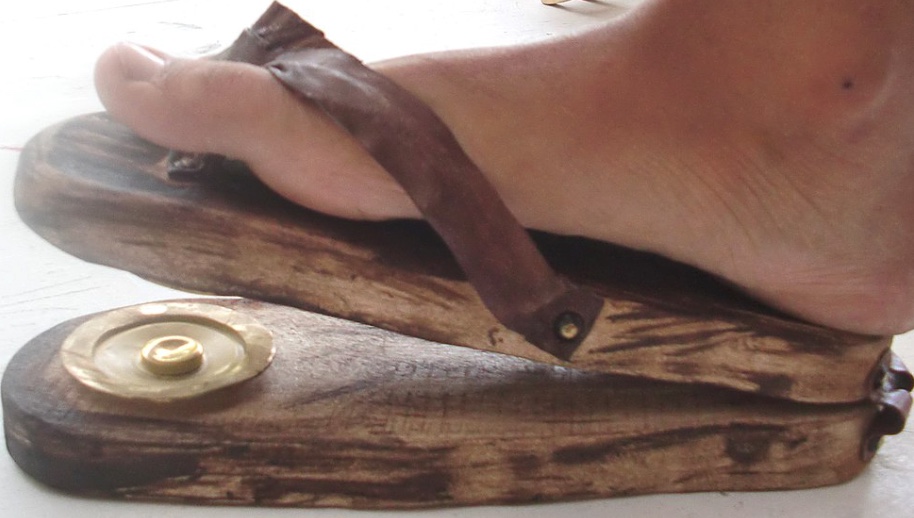
The Ancient Romans liked to keep a beat and the scabellum was played with the feet rather than the hands. It comprised two pieces of wood that looked a bit like sandals and were hinged together, with a metal cymbal attached to the interior. The player would wear the top of the scabellum like a sandal and bang out the beat.
Ancient Rome was known to have female flamenco dancers from Spain – known as puellae Gaditanae (girls from Gades, now Cadiz) – as entertainment, so it may be that the scabellum had a very similar sound to the flamenco compass we know today. Incidentally, some traditional Italian operas include set flamenco dancing scenes – including Bizet’s Carmen, Verdi’s La Traviata and Puccini’s Madama Butterfly.
The Roman poet Martial recounts how, during the return of Roman general Quintus Caecilius Metellus (155 BC – 91 BC) to Rome after the Sertorian War of 74 BC, Spanish girls from Anadalusia danced – and had “mischievous and playful feet” and metal castanets( crusmata baetica). Marcus Valerius Martialis was born in Spain in around 40 AD, so obviously knew a thing or two about mischievous feet.
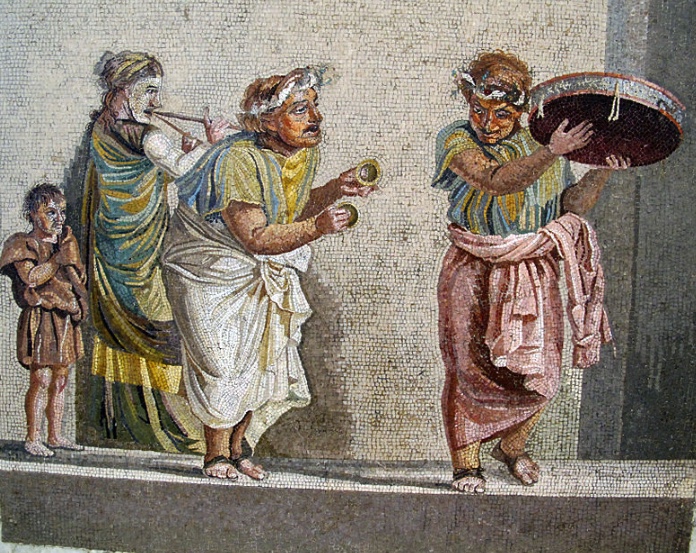
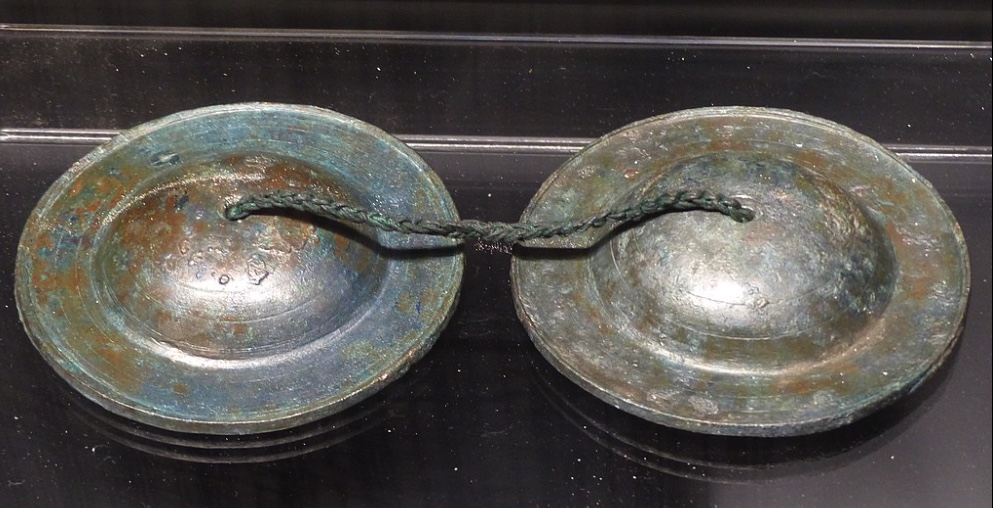
The Ancient Romans also had an instrument similar to castanets. This was a small version of the cymbal – or cymballum – called the cymbala, which were small metal discs tied to the fingers. Some of you may be familiar with taal – the finger cymbals from the Indian subcontinent. It is possible castanets are related to these, as Romanies are thought to have originated from Rajasthan in India.
Taal are tied together like castanets – the Ancient Romans tied the tiny cymbals to their fingers with twine or ribbon, but played them in a similar way. The word taal (Tālà i Sanskrit) means “clap” – and the Roman cymbala made a syncopated “ching” sound rather than the clap of wooden castanets today. The Romans did have a form of castanets called crotalum, which were made from shells.
It is easy to see how instruments originated from different cultures and developed over time. The large cymbellum was made of wood and played with the hand like a tambour – but the Romans also had a tambourine-like instrument played with a stick and called a tympanum, that was associated with the Greek God of chaos and dissolute enjoyment such as drunkenness, Dionysius (Bacchus in Roman mythology). Because of this association, it is thought the tympanum was played at parties mainly.
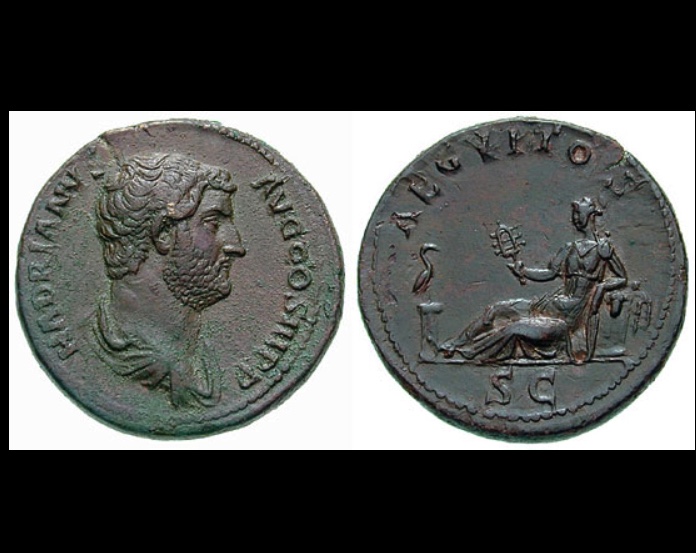
Other percussion instruments included the sistrum – perhaps one of the most well-known of Roman musical instruments that was used solely for ceremonies. It functioned like a rattle and had metal rings wrapped round a metal frame that was shaped like a prong with a crossbar.
There were many other instruments in Ancient Rome – but these were some of the most popular.
Singing for your supper in Ancient Rome
We have seen how emotional the Ancient Romans could be when listening to music – and how it played such a large part in their daily and ceremonial lives. So now we need a lead singer and some backing singers.
It is now known that singers have what are known as a “giggle” note – and a “sob” note. As someone who trained classically as a soprano, I can confirm this! When taking lessons, I would suddenly choke back the tears or start smiling when singing certain notes. It was only when my teacher explained the giggle and sob notes that I understood why this happened.
If you find that you feel weepy or happy during certain pieces of music, it may be that you have found your giggle and sob notes, just as the Ancient Romans did.
The volume, timbre and tone of the notes – the way they are played or sung – can also contribute to your emotional responses, whether in singing, or when musicians play instruments. This need to derive an emotional experience from music was no different for Ancient Romans.
Singing and music in Ancient Rome was thought to originate from the original Etruscan heritage of the people who lived on the agricultural lands that later became Rome, as well as Greek traditions. It was Rome’s second king , Numa Pompilius (753-673 BC) – who succeeded Romulus – who initiated the tradition of music and singing in Rome.
Numa Pompilius established several important temples in Rome – including the Temple of Juno and the Temple of the Vestal Virgins. He also invented the religious calendar. His promotion of music may well have been tied in with his religious and ceremonial innovations – and by the time the republic had drawn to a close after the death of Julius Caesar (100 BC – 44 BC) and the reign of Ancient Rome’s first emperor, Augustus (63 BC – 14 AD) had begun, music was established as a part of everyday life and ceremonies – including children’s choirs.

Not surprisingly, singers and musicians were employed at funerals in Ancient Rome, as well as at ceremonial events. It was thought that beautiful music helped the spirit to pass peacefully to the Underworld, as well as comforting the mourners. It is a custom we have today across most cultures: music is often our first recourse when we mark the passing of someone.
In Ancient Rome, the guild of funeral musicians – known as a collegium – were responsible for the music played. it is thought the music would mainly be flutes, but there might also be a tubus or cornu. Funerals in Ancient Rome were supposed to be modest, dignified ceremonies and the music would reflect this.
There were singing opportunities for women in Ancient Rome, as well as men – at funerals, a group of female singers called praeficiae (professional mourners) would follow the musicians and sing a song in praise of the deceased.
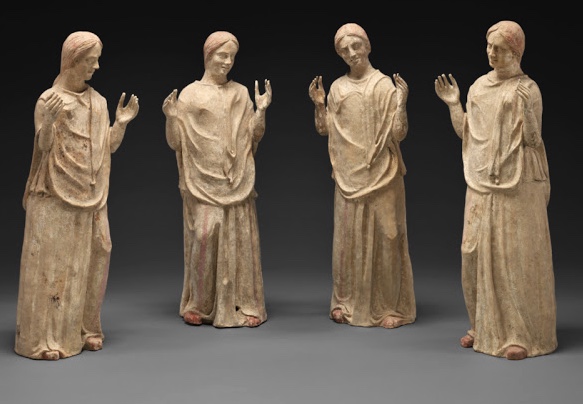
In Ancient Rome, it seems the lead singers were often women.
The musical legacy of Ancient Rome
Italy as we know it is still known for its musical heritage and operatic tradition. You can find all sorts of singers and musicians on the streets of Rome and across Italy – from rock musicians, to experienced opera singers happily singing famous arias for tourists, as well as harp and hang players and some fabulous jazz and R&B musicians.
The Borghese Gardens on Sunday is a good place to take a stroll if you love music, but any piazza in Rome is usually seen as an opportunity for some great singers and musicians to perform. Head for Castel Sant’ Angelo as a start, where musicians gather beneath the battlements and busk all day.

But visit Milan and you will find Piazza Duomo has some world-class musicians busking – or visit Verona and you will hear leading opera singers warming up for the summer opera season as you amble through the streets.
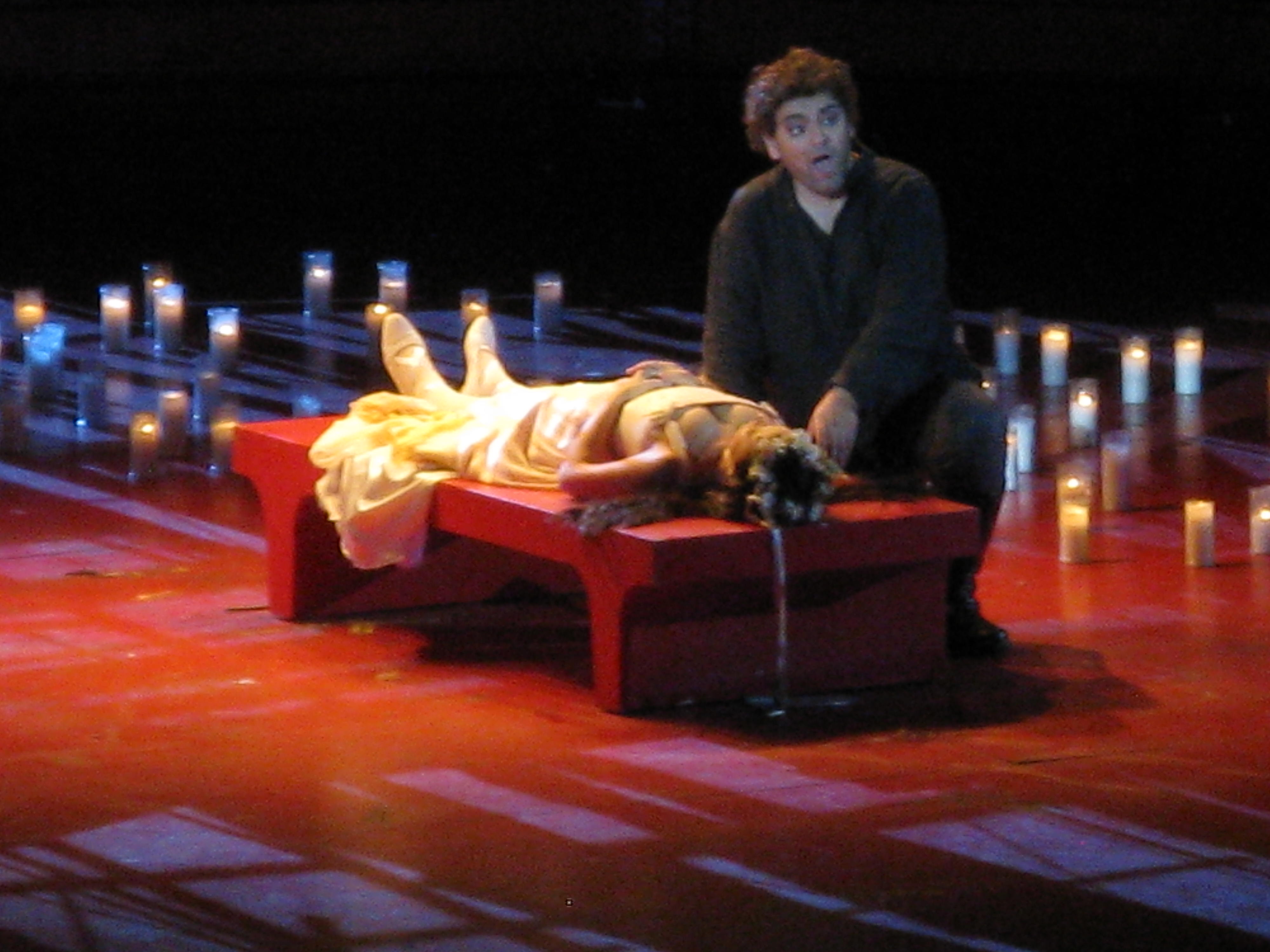
The Ancient Romans also loved dance and theatre – ballet is thought to have taken place during festivals and ceremonies, and as opera developed, dance interludes became the tradition.
Today Rome’s ancient amphitheatres across the globe are used for all kinds of musical performances, from rock bands, to opera and dance or theatre. The Ancient Romans would approve.
Buon viaggio!
Featured image: Brass band in Piazza di Spagna
Images copyright A. Meredith, except where stated.
 novelromealone
What a wonderful post! So many have written about the Romans but this blog shows an artistic side we rarely have the opportunity to learn about. Grazie mille!
LikeLike