April – Mensis Aprilis to the Ancient Romans – used to be the second month of Ancient Rome’s ten-month calendar.
April was also the month of Aphrodite, goddess of beauty, also known as Apru. Aphrodite is actually an Ancient Greek goddess who was associated with love, beauty, pleasure and fertility.

Newlyweds in Rome take a passegiata – a walk through the city to visit the ancient sites for wedding photos. This elegant couple are posing for photos on the Capitoline Hill.
Aphrodite was also closely aligned to Venus, the Roman goddess of love. Venus the goddess was named by the Ancient Romans after the planet Venus.

 Temple of Venus at night, Forum, Rome
Origins of Aphrodite
Worship of Aphrodite as a cult dated back to worship of the Pheonician goddess Astarte – as well as the Eastern Semitic goddess Ishtar and the Sumatran goddess Inanna.
Venus is a good example of how Roman gods and goddesses frequently had their origins in more ancient deities – the Romans were adept at borrowing and adapting existing beliefs and cults and adopting deities as their own.
Aphrodite is also known as Cytherea and Cypris – Lady of Cythera and Cyprus. One of the flowers she is associated with, appropriately enough, are roses.

Rome today is very much a city of roses – there are rose sellers all over the city and many of the roses end up floating in fountains, like the romantic Trevi Fountain.
Love in Ancient Rome
Although Paris is known as the city of love today, cities like Rome and Verona have their own romantic credentials steeped in ancient history.
We might think of Ancient Rome as a more violent and military power base, but Roman emperors frequently associated themselves with ancient deities like Venus. And some even fell in love – including Emperor Hadrian, whose lover was a beauteous Greek youth called Antinous.
There were many festivals devoted to love in Ancient Rome, including Veneralia (dedicated to Venus Verticordia and Fortuna Virilis), Parentalia (family love) and Lupercalia (the Ancient Romans’ version of Valentine’s Day).

Antinous – a Greek youth who was the lover of Emperor Hadrian, who was devastated when Antinous drowned in the River Tiber.
Julius Caesar and Aphrodite
Julius Caesar associated himself with Aeneas, the legendary hero of Ancient Rome and Troy, as portrayed in the poet Virgil’s epic Aeneid.
Aeneas was the son of Aphrodite and Anchises and as such was descended from the Trojan royal family – the Aeneid also links him to the mythological founding of Rome.
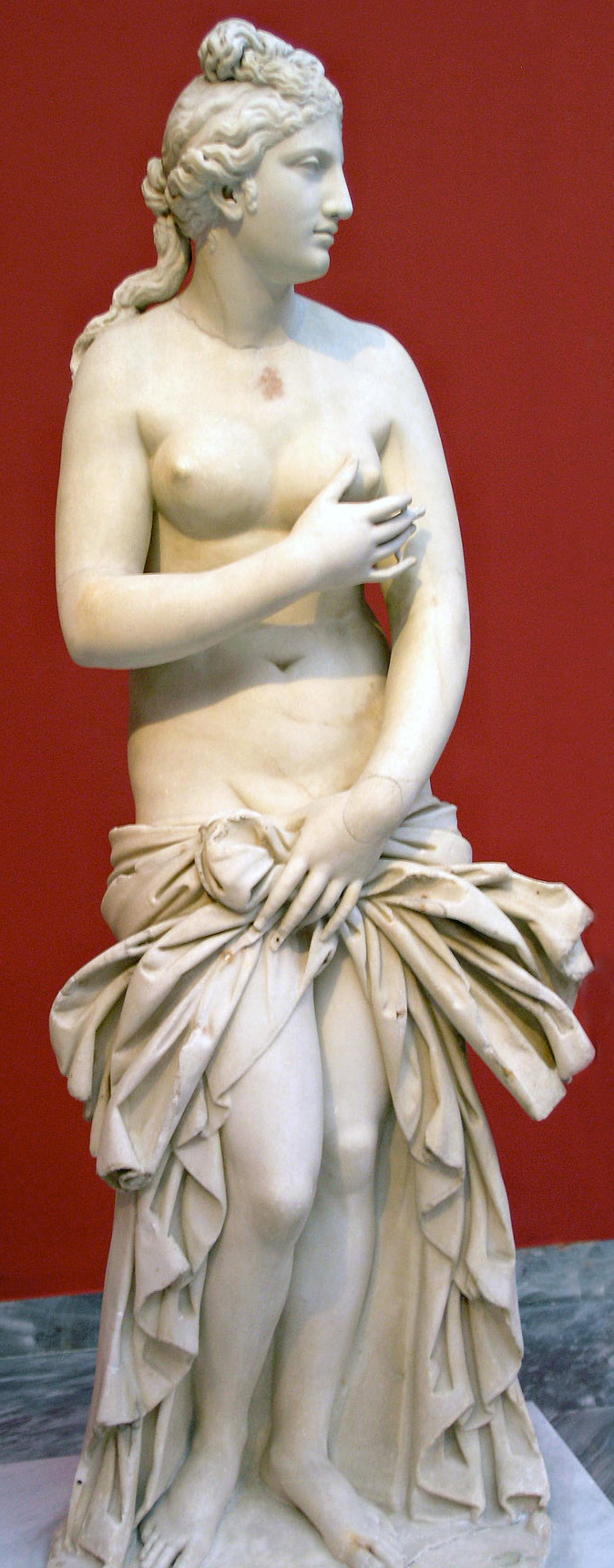
Julius Caesar identifying as a direct descendant of Aeneas also made his line directly descended from the goddess Aphrodite – the epic poem the Aeneid thus adds to Julius Caesar’s own mythology, making him a direct descendant of the founders of the city of Rome.
It was, however, Julius Caesar’s attempts to legitimise his succession and establish himself as a perpetual ruler and a demi-god that ended his life, when senators ambushed and murdered him in the Theatre of Pompey on 15 March 44BC, over fears that Caesar was seizing too much power and glory for himself.

The Founding of Rome
As well as being the month of Aphrodite, April is also the month when Rome was founded – and the exact date of its foundation is thought to be 21 April.
The area that became Rome was heavily forested and 21 April marks the celebration of the goddess of shepherds, Pales, suggesting that the Eternal City grew out of a pastoral idyll.
There is less frolicking with nymphs and shepherds in Rome these days, but it is still the Eternal City of romance.
Buon viaggio!
 novelromealone