Good news for Rome fans who cannot get there – the BBC is repeating Professor Simon Sebag-Montefiore’s 2012 series Rome: A History of the Eternal City.
This three-part series provides a comprehensive history of the founding of Rome, how it became the leading Christian country – and the eventual demise of the Eternal City.
This week we have episode 2, in which the rise of Christianity in Rome is covered. Even if you are not mad about religion, it is a fascinating insight in to Rome – plus the chance to wander round Rome with a leading historian – and also see Rome in the rain. It is, of course, lovely.
Prof Sebag-Montefiore explains how Emperor Constantine began to promote Christianity after defeating his co-Emperor Maxentius in battle after seeing a vision and going into battle using shields with crosses on them.
Before we get to the battlefield, though, we make our way through the persecution of the Christian martyrs, inclduing Peter, one of Christ’s original dsicples who requested to be crucified upside down out of respect for Jesus.
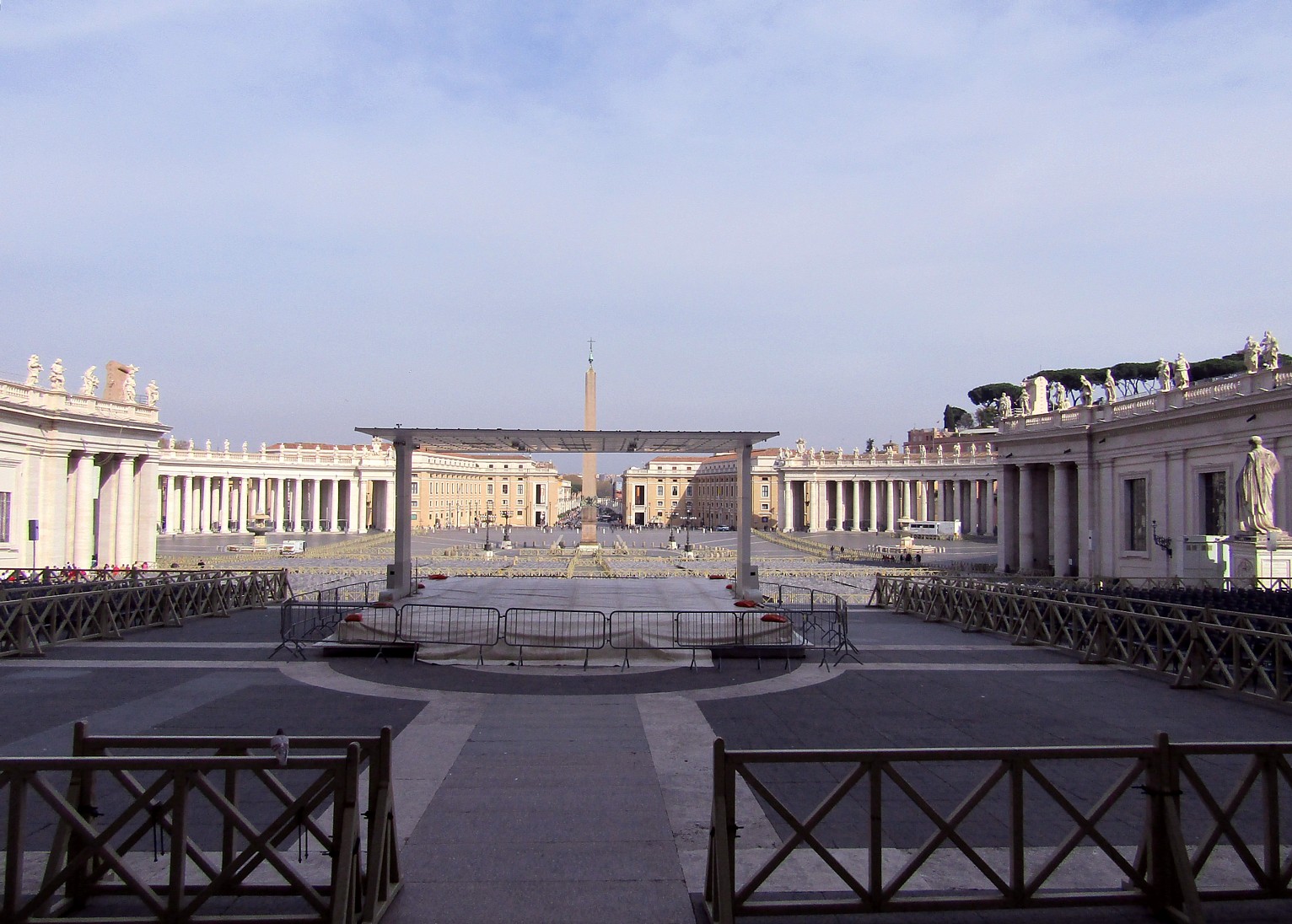
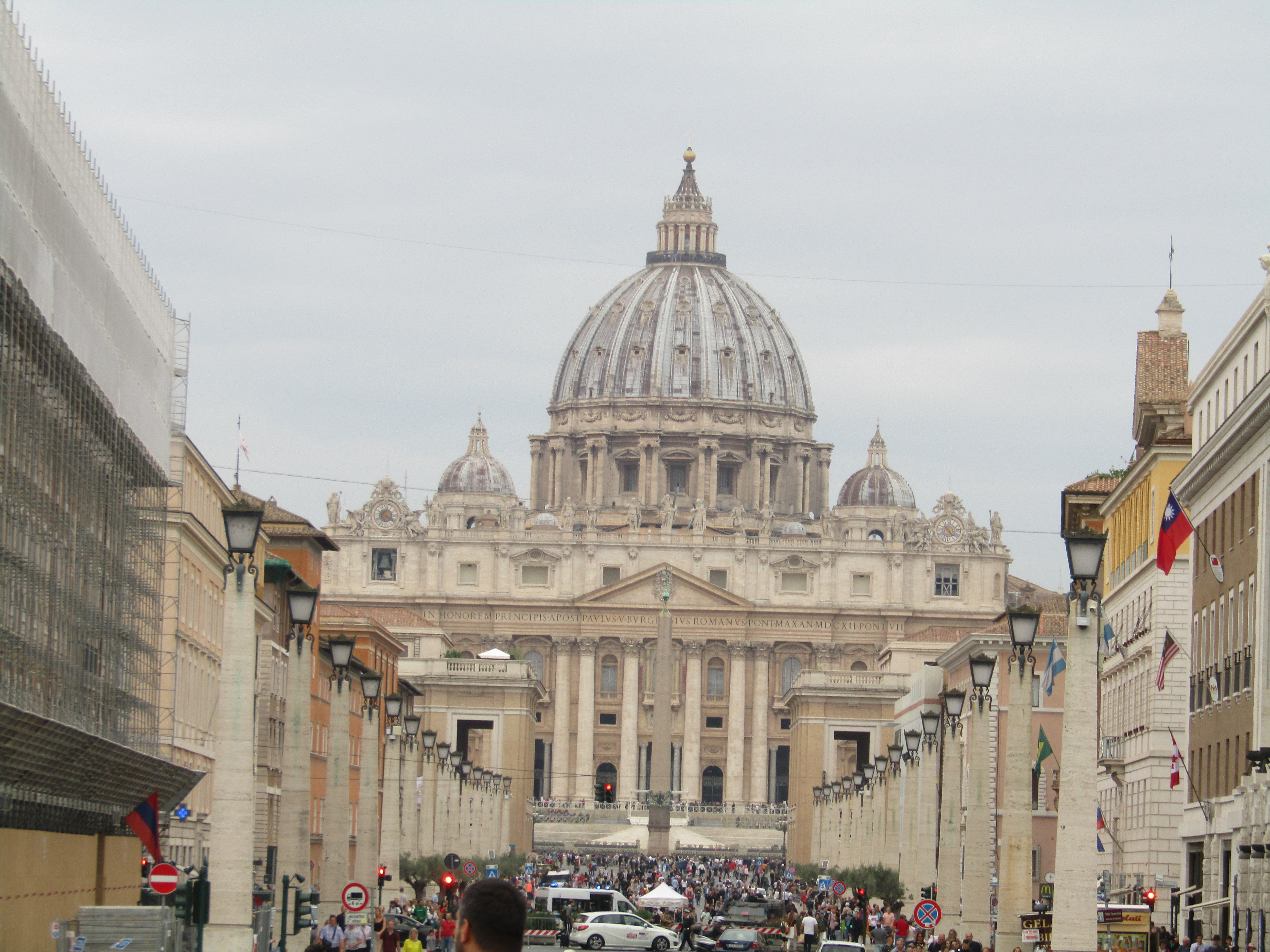
St Peter’s as we now know it, started life as a racecourse outside the city – with a huge Egyptian pylon in the middle of it. The basilica – there have been two versions – was built in memory of St Peter on the site of the racecourse, with the pylon still in place today.
As a warning, if you are sensitive to dead bodies, we also are taken to view the mummified body of the martyr Santa Vittoria, who is on display looking like a wax model. Her body is wax enhanced (the brave can view it online at https://www.atlasobscura.com/places/saint-victorias-incorruptible-body). But no, the camera directs us to see aspects of Saint Victoria we might rather not, so just be aware of this.
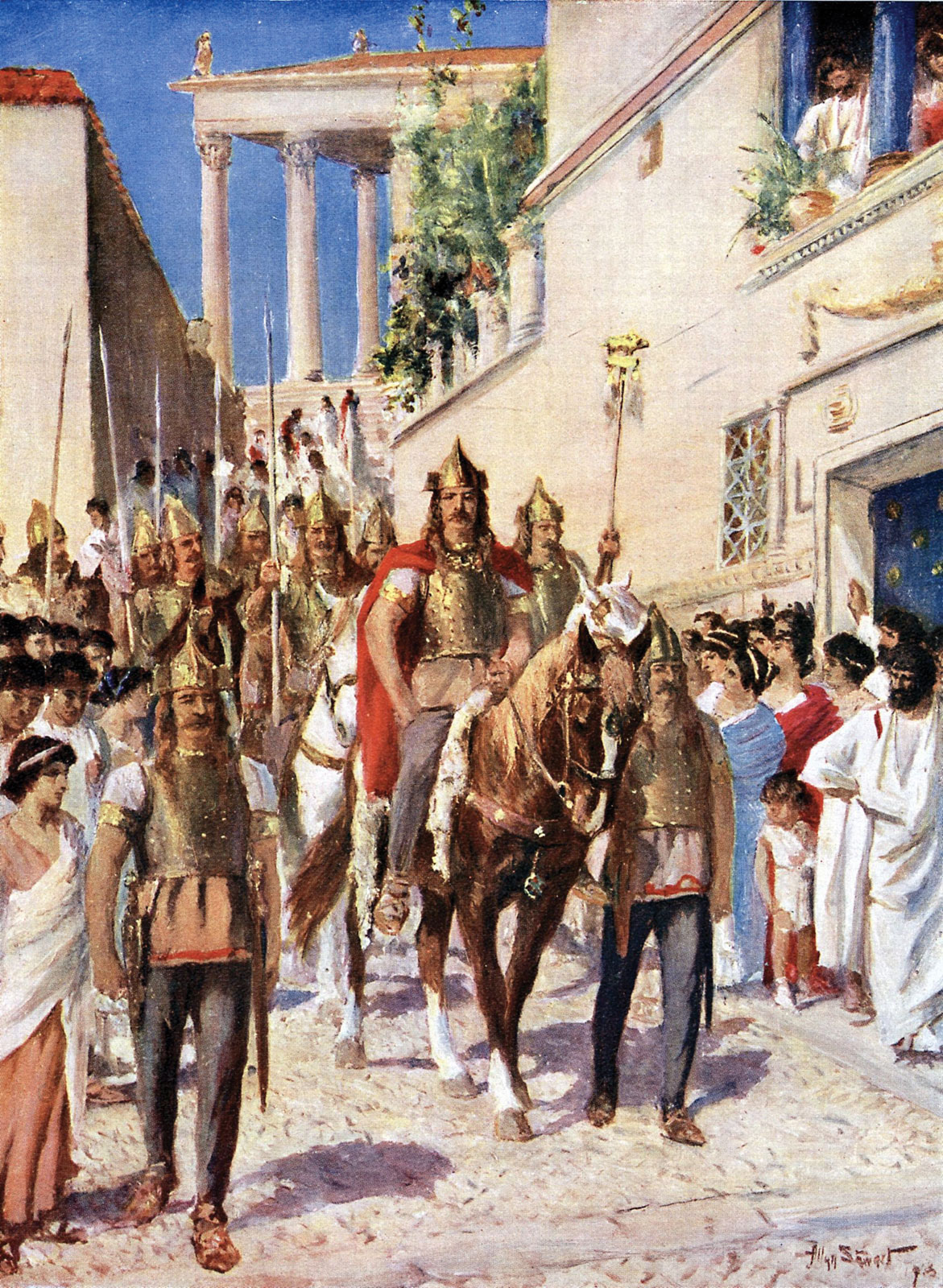
Alaric depicted entering Athens
The fall of Rome and the arrival of the Visigoths under Alaric in 410AD- and the first pope, Leo I or Leo the Great (440-461AD), who promoted Christianity and built churches, are also covered in this episode.
In 590AD, the Lombards appeared on the scene, when Rome was in decay with a small population of 90,000 that was starving.
Fortunately Pope Gregory pitched up – in search of peace, he had turned his family home into a monastery that still exists. We get to see his monastic cell and the poky hole where he used to sleep, before duty called. The church was the only authority still in existence at the time and Gregory brokered peace with the invading Lombards and began to run the city, feeding the hungry from his own estates.
He also began to spread Christianity – sending a mission to England and helping to establish Rome as a place of pilgrimage and a holy city. He also introduced the idea of holy relics, which some pilgrims took home with them.
We then see what happened with the arrival of the Arabs and Islam – and an alliance with Charlemagne after Rome found itself the only Christian city left. There are at this stage more details of physical torture that some might find unpleasant. Charlemagne had himself crowned Holy Roman Emperor as the absolute power. It did not go quite as well as planned, however.
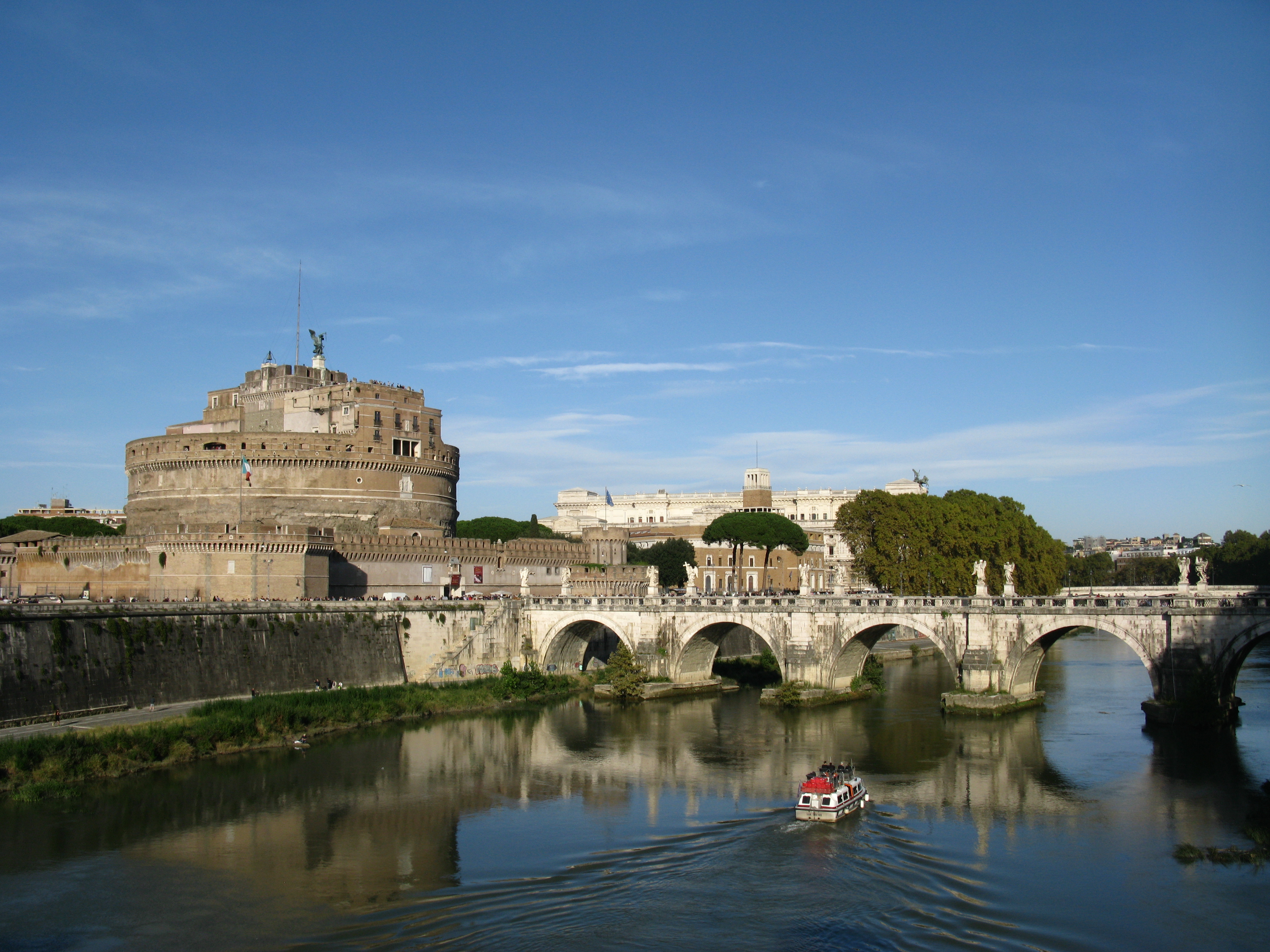
I won’t spoil the ending – but there are more gruesome details of popes being exhumed, defiled, thrown into the Tiber, or imprisoned in Castel Sant’Angelo – and the multifarious depravities of ruling families and popes.
In 1075, Pope Gregory VII put his foot down and declared Popes ruled Holy Roman Emperors. That didn’t go so well, either.
It finally all blew up in Rome when the Normans arrived. Rome burned. The Popes abandoned Rome and left for France. Rome was an unholy place and all but done for.
But don’t despair – in Episode 3, Rome rises again like a phoenix from its ashes.
You can see this episode and others in the series online at BBC4 – available now on BBC iPlayer (https://www.bbc.co.uk/programmes/p011y638)
Buon viaggio!

