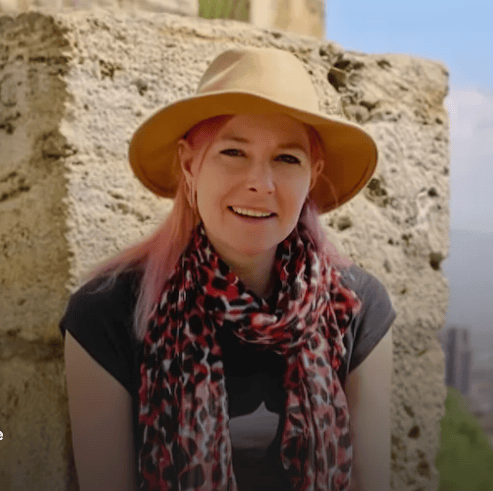
Alice Roberts is off on another train journey – and this time through the Ottoman Empire, starting with Istanbul in present day Turkey – formerly known as Constantinople after Emperor Constantine.
Constantinople was first captured by a Latin ruler in 1261 BC. It became the centre of the Byzantine Empire – now it is a busy tourist destination, with 4,000 visitors shopping in the Grand Bazaar every day, now the biggest covered market in the world.
Professor Roberts makes her round the city with the help of a fellow historian, giving us a brief rundown of the history of the city. Throughout its history, Constantinople – or Istanbul, as we know it – was a busy trading port. During the Industrial Revolution in the west, the city traded with major cities like Manchester in the north of England.
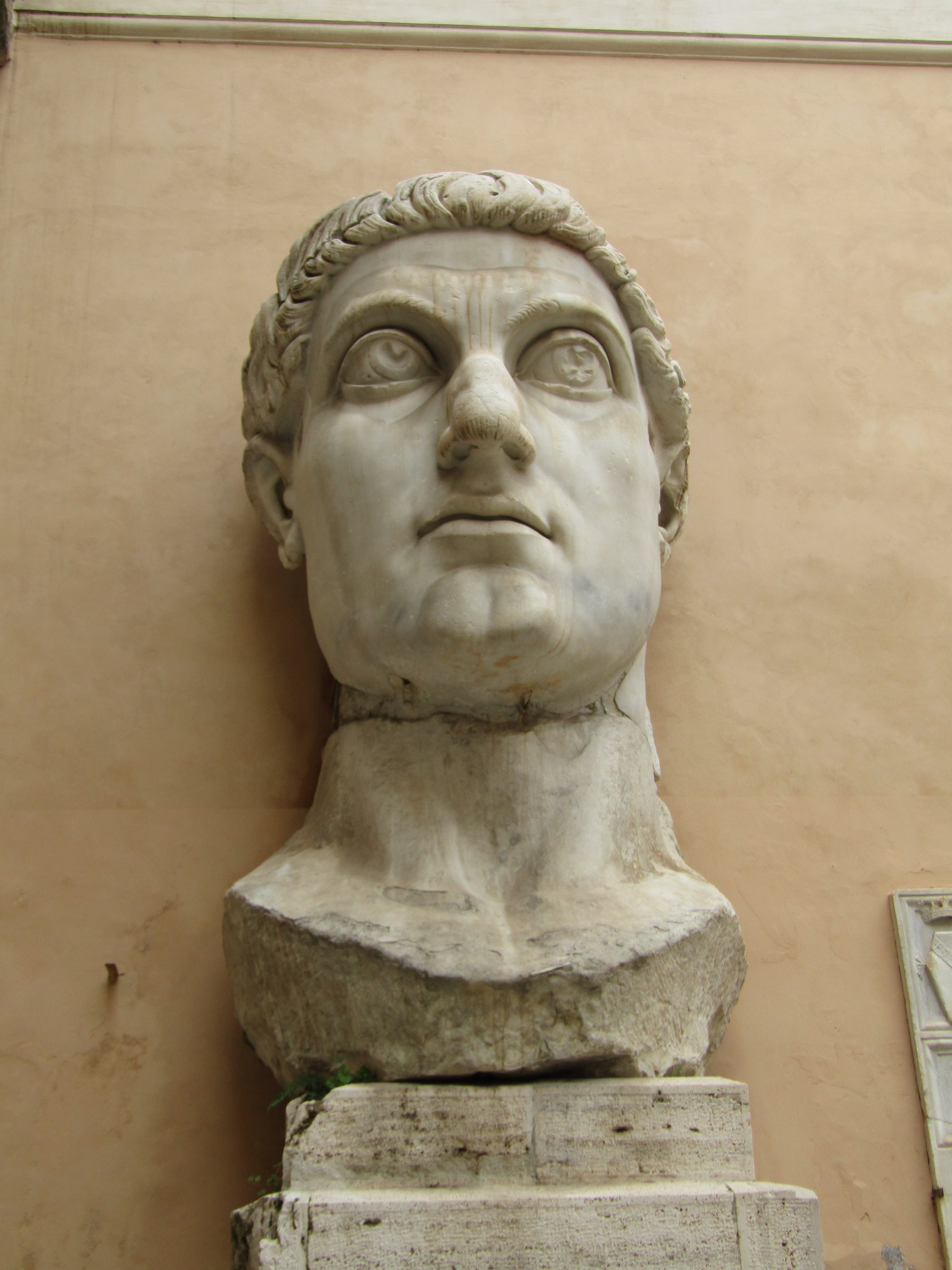
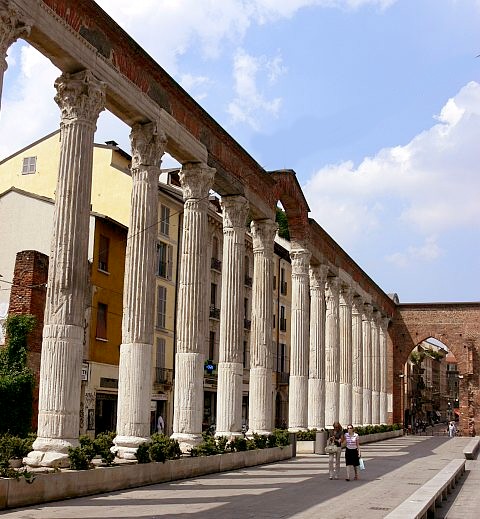
The city pre-Rome was known as Byzantium – but Emperor Constantine captured it in AD324. Rome originally christened the city Nova Roma – “New Rome”, making it the eastern capital of the Roman Empire from AD330. Rome’s might was already on the wane by then and Constantine divided the empire into the Western and Eastern Empires. Mediolanium – what is now Milan – was the capital of the Western Empire from AD266.
The Roman Empire fell to the Goth invasion in AD 410, by which time Rome’s might had already dwindled. But Constantinople remained the sole capital of the Eastern Roman Empire until the arrive of the Ottomans in AD1453. Following the fall of Rome in the fifth century and AD1453, it was the wealthiest city in Europe – its university had been founded in the fifth century, as well as its famous Imperial Library.
Constantinople maintains its ancient architecture, but Alice Roberts also shows us the modern side to the city – now the largest city in Europe, with a population of around 20 million.
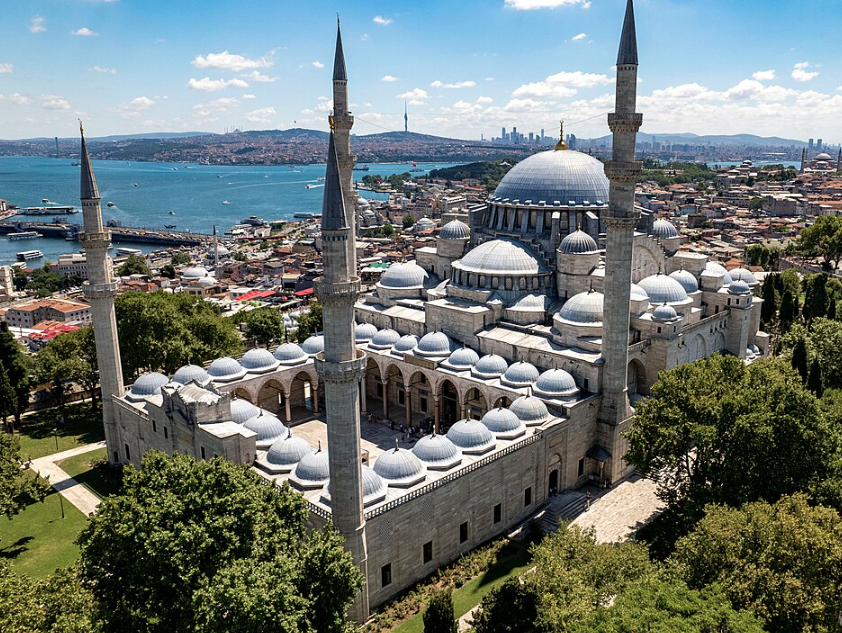
Hagia Sofia (Image: Wikipedia)
The ancient walled city is a Unesco Heritage site, but with its own metro underground station. There, Christianity mixes with Islamic in the images on the walls of the mosques, which date from Byzantine times, but which changed from mosques to churches and then back to mosques again in some cases. Istanbul still boasts the Roman Theodosian Walls – and, of course, the Hagia Sofia, once a church and now a mosque. Suleiman’s Mosque is also on the tourist trail – as well as rug haggling in the bazaar.
There was tolerance in the city for different faith groups – and Prof Roberts visits the church of St George – a modest exterior that houses a stunning Orthodox Christian golden and red interior. The church is the East’s equivalent of St Peter’s in Rome – St George was a Roman officer born in Grecian Cappodoccia in Turkey.
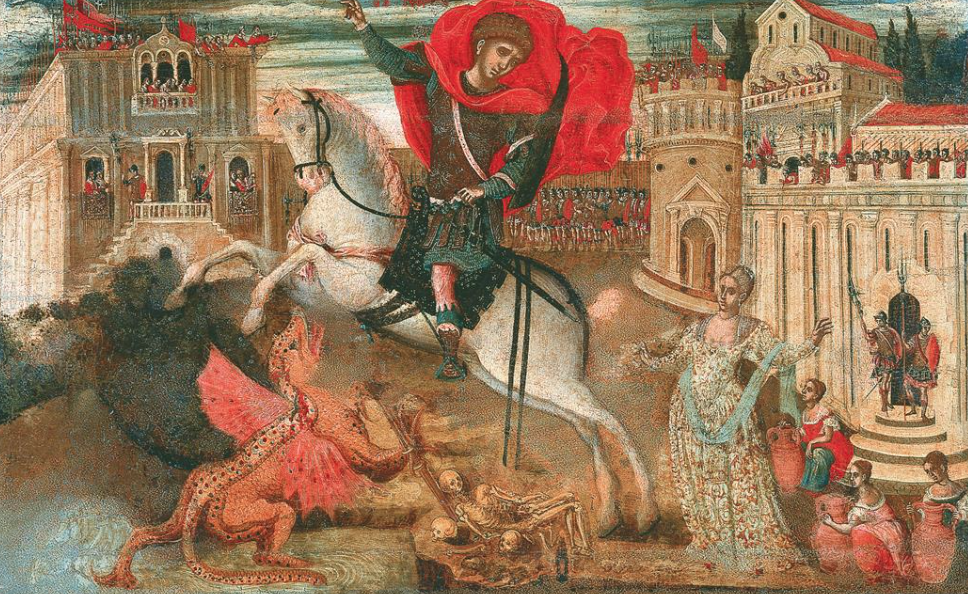
Saint George the Dragon-Slayer by Georgios Klontzas (Byzantine museum)
After Istanbul, we take an overnight train journey to the capital of Bulgaria, Sofia.
All four episodes in the series Ottoman Empire by Train with Alice Roberts are available on the Channel 4 website. https://www.channel4.com/programmes/ottoman-empire-by-train-with-alice-roberts.
You can read more about historic Roman sites in Istanbul at https://www.thetravel.com/best-roman-and-byzantine-ruins-in-istanbul/
Buon viaggio – and iyi yolculuklar!
Featured Image: Alice Roberts, copyright Channel 4

